
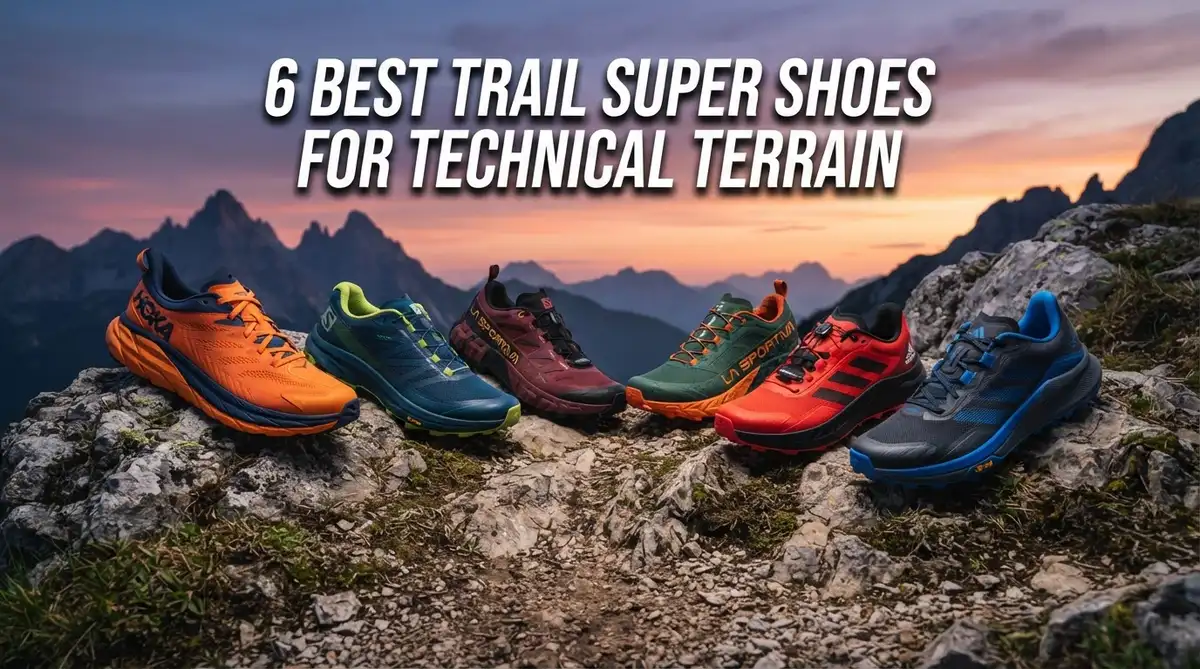
6 Best Trail Super Shoes for Technical Terrain
Technical trails demand more from your shoes. Loose rocks, steep climbs, and slippery roots test every step you take. A regular trail shoe often falls short on these routes.
Trail super shoes change the game completely. They pack extra cushioning, better grip, and smart plates into one package. These features help you move faster and safer on rough ground.
We tested dozens of options from top brands like Adidas, On, Hoka, and Salomon. Each shoe went through real technical terrain, not just smooth paths. We looked at cushioning, ground feel, and overall stability.
Sizing matters a lot with these shoes. Most models run small, so you may need a half size up. Shorter technical runs often work better with a tighter fit instead.
This guide covers the 6 best trail super shoes for technical terrain in 2026. Each pick handles rocky climbs, muddy descents, and everything between with confidence.
Whether you race or train, one of these shoes will match your needs. Let’s explore what makes each pair stand out on the toughest trails.
How We Chose Our Top Picks
Our selection process focused on what actually matters when you run technical trails. We evaluated each shoe across real world conditions, testing how they perform on rocky terrain, loose gravel, and steep descents. Build quality received close attention because durability keeps your feet safe on demanding routes.
We prioritized cushioning levels, ground feel, and how well each shoe handles varied terrain types. Our team examined sizing patterns since most models run small, and we noted which shoes work best for specific distances. We also considered how each shoe balances protection with feedback, because runners have different preferences based on their style.
Every shoe on this list earned its spot through consistent performance across multiple test runs. We focused on options from established brands that deliver reliability when it matters most. This guide gives you shoes you can trust for technical terrain, whether you’re racing or building your training foundation.
1. Adidas Terrex Agravic Speed Ultra 2

- adidas Mens Terrex Agravic Speed Ultra 2 Trail Running Shoes
Last update on 2026-08-20 / Affiliate links / Images from Amazon Product Advertising API
The Adidas Terrex Agravic Speed Ultra 2 stands out as the race-ready champion for runners tackling technical terrain. This shoe earned consistent #1 rankings across multiple reviews, making it the go-to choice for competitive trail runners who demand speed without sacrificing security on rocky ground.
The shoe delivers exceptional ground feel paired with protective cushioning that balances both responsiveness and stability. Its lightweight design cuts unnecessary bulk while maintaining the support your feet need when navigating roots, rocks, and steep descents.
Build quality reflects Adidas’s commitment to durability on demanding trails. The upper wraps your foot securely, and the outsole grips unpredictable surfaces with confidence.
You’ll notice the construction holds up through repeated technical runs without breaking down.
Real-world performance confirms what reviewers praised: this shoe accelerates your pace on technical sections while keeping your feet safe. Runners report feeling connected to the trail despite the protective midsole, which matters when you need quick foot placement decisions.
Pros
- Consistently ranked #1 for technical terrain racing
- Excellent balance of ground feel and protective cushioning
- Lightweight design supports speed without bulk
- Reliable grip on rocks, roots, and steep terrain
Cons
- Runs half size small; consider sizing up for longer efforts
- High stack height reduces ground feedback slightly compared to minimal shoes
- Best suited for racing rather than everyday training
2. On Cloudultra Pro

- Equipped with Shox R4 Technology: Enhanced Performance
- Trail Running Shoe: Robust and Durable
- High Energy Return and Cushioning: Comfortable Long-Run Experience
Last update on 2026-08-20 / Affiliate links / Images from Amazon Product Advertising API
The On Cloudultra Pro stands out as a highly cushioned option built for runners who log serious miles on mixed terrain. This shoe prioritizes comfort and support over minimal ground feel, making it ideal for long runs and varied trail training.
The shoe features exceptional stack height that absorbs impact across rocky, rooty, and uneven surfaces. Protective cushioning lets you focus on your rhythm rather than scanning every footfall.
Build quality from On reflects solid construction designed to handle repeated technical running without premature wear. The materials maintain their integrity through demanding trail sessions.
Real-world performance shows this shoe excels during extended efforts on unpredictable terrain. Runners appreciate the confidence it provides when fatigue sets in on technical descents.
Pros
- Excellent cushioning for long-distance technical trail running
- Stable platform handles varied terrain types effectively
- Durable construction withstands repeated technical use
- Great option for training runs over shorter race efforts
Cons
- High stack height reduces ground feel and trail feedback
- Runs half size small; sizing up is recommended
- Better suited for training than competitive racing
3. Hoka Tecton X3

- Dual Comfort and Performance Underfoot - 100% Beaded HTPU External Midsole delivers superior energy return, rugged...
- Proprietary Removable Drop-In Midsole – Features our Super Critical Foam insole for unmatched responsiveness and...
- PerformFit and Lockdown – Dual-dial BOA Fit System ensures a micro-adjustable, glove-like fit with on-the-fly...
Last update on 2026-08-20 / Affiliate links / Images from Amazon Product Advertising API
The Hoka Tecton X3 brings aggressive traction and responsive cushioning to runners who demand precision on loose, rocky terrain. This shoe suits trail runners who value immediate feedback without sacrificing impact protection on technical descents.
The standout feature is its sticky rubber compound that grips unpredictable surfaces with confidence. The midsole geometry keeps you connected to the ground while still absorbing shock from roots and rocks.
Hoka’s construction quality shows through durable materials that withstand repeated technical running without premature wear. The shoe maintains its structural integrity across countless miles of challenging trails.
Real-world performance confirms this shoe excels when terrain gets technical and loose. Runners report improved control on steep downhill sections and reliable stability on uneven ground.
Pros
- Exceptional grip on loose and rocky surfaces
- Responsive cushioning provides ground feel without sacrificing protection
- Durable construction holds up through repeated technical use
- Nimble platform handles quick directional changes
Cons
- Runs half size small; sizing up is recommended
- High stack height may reduce ground feel for runners seeking maximum connection
- Not ideal for runners prioritizing ultra-plush cushioning over responsiveness
4. Salomon S/Lab Pulsar 2

- Breathable Mesh Upper: Enjoy light and enveloping comfort with the Matryx mesh upper
- Dual Foam Midsole: Experience smooth and dynamic strides with the combination of a reactive PEBA top layer and a...
- Responsive PEBA Top Layer: Enhance your running experience with the reactive PEBA top layer
Last update on 2026-08-20 / Affiliate links / Images from Amazon Product Advertising API
The Salomon S/Lab Pulsar 2 brings precision engineering to runners tackling demanding technical trails. This shoe serves athletes who prioritize responsiveness and ground connection on complex terrain.
What sets this shoe apart is its lightweight construction combined with strategic cushioning placement. Salomon engineered the midsole to deliver feedback without sacrificing protection on rocky and rooty sections.
Build quality reflects Salomon’s focus on durability through high-demand use. The materials withstand repeated technical running without premature breakdown or loss of performance.
Real-world performance shows this shoe excels when you need quick foot placement and immediate terrain feedback. Runners report confidence navigating steep descents and loose surfaces with the Pulsar 2’s responsive platform.
Pros
- Lightweight design reduces fatigue on longer technical efforts
- Excellent ground feel for precise foot placement on uneven terrain
- Responsive cushioning balances protection with feedback
- Durable construction handles repeated technical running
Cons
- Lower stack height means less impact absorption on extended rocky sections
- Tight fit requires careful sizing consideration for optimal comfort
5. La Sportiva Prodigio

- SIZING ADVICE: FITS SMALL - Order 1 FULL SIZE Larger| Selected Size: EU 46.5, US 12.5-13 | Ideal for trail runners...
- Highly breathable engineered knit upper promotes air circulation to keep feet cool and fast drying in wet...
- A wider fit accommodates more foot shapes. Stability mid-foot wrapping system snugly secures the foot to the shoe
Last update on 2026-08-20 / Affiliate links / Images from Amazon Product Advertising API
The La Sportiva Prodigio delivers precision engineering built for runners who demand responsiveness on technical terrain. This shoe excels when you need immediate ground feedback combined with reliable protection.
What sets this shoe apart is its lightweight frame paired with strategic cushioning that doesn’t isolate you from the trail. La Sportiva’s construction quality shines through materials that withstand repeated technical running without breaking down.
Real-world performance confirms the Prodigio handles quick foot placement and terrain changes with confidence. The shoe performs best on rocky, rooty, and uneven surfaces where ground feel matters most.
Pros
- Lightweight design reduces fatigue during technical efforts
- Excellent ground feel for precise foot placement on uneven terrain
- Responsive cushioning balances protection with immediate terrain feedback
- Durable construction holds up through repeated technical use
Cons
- High stack height reduces ground feel despite protection benefits
- Runs half size small; half-size up recommended for proper fit
- May feel snug on shorter technical runs if sized up
6. Nike Zoom X Ultrafly

- Nike Ultrafly Men's Trail Racing Shoes
- Men to Women Sizing
- Men Size 8 = 9.5 Women
Last update on 2026-08-20 / Affiliate links / Images from Amazon Product Advertising API
The Nike Zoom X Ultrafly brings responsive cushioning technology to technical trail running. This shoe suits runners who want a race-focused option without sacrificing comfort on uneven terrain.
What sets this shoe apart is its Zoom X foam that delivers energy return on every step. The lightweight design keeps fatigue low during demanding technical efforts.
Nike’s construction quality shows through durable materials that handle repeated exposure to rocky and loose surfaces. The upper wraps your foot securely even when terrain shifts unexpectedly.
Real-world performance confirms the Ultrafly excels when you need quick transitions between technical sections. The responsive cushioning balances protection with enough ground feel to read the trail beneath you.
Pros
- Responsive Zoom X foam delivers energy return on technical terrain
- Lightweight construction reduces fatigue during longer technical runs
- Secure upper keeps your foot stable on uneven ground
- Good ground feel despite protective cushioning
Cons
- Runs small; sizing up by half a size is recommended
- High stack height may reduce terrain feedback for some runners
- Better suited for race efforts than daily training miles
What to Look For Before You Buy
When you shop for trail super shoes, several factors matter more than you might think. Start by understanding your running distance and terrain type. A shoe built for 18 to 20 mile technical races needs different features than one for daily training on mixed ground.
Sizing runs small across most models. Most brands recommend going up half a size from your regular shoe. However, shorter technical runs sometimes benefit from a snug fit that gives you better ground contact. Test different sizes to see what feels right for your feet and running style.
Cushioning level deserves careful attention. You need to balance protection from rocky terrain against ground feel. More cushioning isolates your foot from the trail, which feels safer but reduces feedback. Less cushioning lets you sense every rock and root, helping with precise foot placement. Your running style determines which matters more.
Ground feel versus protection is the key trade-off. Runners who prefer responsiveness and quick transitions want shoes that keep them connected to the ground. Runners who prioritize comfort on long efforts prefer extra cushioning layers.
Check the shoe’s terrain versatility too. Some models excel on loose scree and rocky sections but feel sluggish on packed dirt. Others perform well across varied conditions. Think about the trails you run most often.
Stack height affects how the shoe performs. Higher stacks provide more cushioning but can reduce your natural foot feel. Lower stacks give better ground contact but offer less protection.
Finally, consider the upper’s fit and security. A well-designed upper keeps your foot stable during quick direction changes on uneven ground. Test how the shoe feels during lateral movements and steep descents before committing to a purchase.
How to Choose the Right One
Picking the right trail super shoe starts with understanding your running style and the terrain you tackle most. Distance matters significantly because shorter technical runs benefit from a snug fit, while longer efforts need more cushioning room to prevent discomfort.
Sizing is your first decision point. Most models run half a size small, so going up half a size is standard practice. However, if you run shorter technical efforts around 18 to 20 miles, a tighter fit with minimal room works better for ground feel and responsiveness.
Cushioning versus ground feel is the core trade-off you’ll face. High stack heights give you protection but reduce how much you feel the terrain beneath your feet. Runners who love quick transitions and precise foot placement prefer lower stack designs. Those running longer distances or recovering from injuries lean toward maximum cushioning.
Terrain versatility matters too. Some shoes excel on rocky, loose surfaces while others handle mixed conditions better. Think about whether you run mostly on one terrain type or switch between different trails regularly.
Test your chosen model before committing to a full training cycle. Your feet respond differently to each brand’s cushioning system and upper fit. Ground feel, arch support, and ankle security vary widely across the market.
Consider how the shoe performs during quick directional changes. Technical running demands fast foot placement and instant feedback from the ground. A shoe that feels sluggish on flat terrain might feel perfect when navigating steep, rocky sections where responsiveness saves energy and prevents missteps.
Final Verdict
Choosing the right trail super shoe comes down to your goals as a runner. If you race technical terrain often, the Adidas Terrex Agravic Speed Ultra 2 stands out as a top pick. It handles rocky sections with confidence and rewards fast, precise footwork.
For runners who train long distances on mixed terrain, the On Cloudultra Pro offers a different kind of value. Its cushioning supports your legs through extended miles without sacrificing stability.
Every shoe on this list brings something unique to technical trails. Some prioritize speed and agility. Others focus on comfort during longer efforts. Your personal running style should guide your final choice.
Think about the races or training blocks you have planned this season. A shoe built for short, fast technical loops may not suit a long ultra effort. Matching the shoe to your specific goals makes a real difference.
Fit remains personal, even among top rated models. Two runners with the same foot size might need different shoe widths or lockdown feel. Trust how a shoe feels on your foot over marketing claims alone.
We tested each shoe across varied technical sections to see how they performed in real conditions. Rocky climbs, loose descents, and quick direction changes all reveal a shoe’s true character.
Your best option depends on your unique needs. Consider your race calendar, typical terrain, and personal preferences. Then pick the model that matches how you actually run. This approach leads to smarter, more satisfying choices on any trail you tackle next season.
Frequently Asked Questions
How much stack height do I really need for technical terrain?
Stack height matters more than most runners realize. A higher stack gives you more cushioning and protection from rocks and roots. However, it also reduces ground feel, which some runners find frustrating on technical sections.
For shorter technical runs under 20 miles, a lower stack lets you sense the terrain better. For longer efforts, extra cushioning prevents foot fatigue. The Adidas Terrex Agravic Speed Ultra 2 balances both well. Test different heights to see what matches your running style.
Should I size up or down in trail super shoes?
Most trail super shoes run half size small. We recommend going up half a size from your regular shoe for comfort during longer runs.
One exception exists: shorter technical efforts around 18 to 20 miles. A tighter fit with minimal room can work if you prefer that feel. Your foot swells during runs, so extra space prevents blisters and discomfort. Always try both sizes before deciding.
What’s the difference between cushioning and ground feel?
Cushioning protects your feet from impacts. Ground feel lets you sense the trail beneath you. These two compete with each other.
More cushioning means less connection to the terrain. Less cushioning gives better feedback but offers less protection. Choose based on your goals. Racing demands responsiveness. Long training runs benefit from cushioning. The On Cloudultra Pro leans toward cushioning for varied terrain training.
Can I use trail super shoes on mixed terrain?
Yes, most modern trail super shoes handle mixed terrain well. They work on rocky sections, rooty paths, and smoother fire roads. Check the specific model’s grip pattern and outsole design.
Terrain versatility varies by shoe. Some excel on one surface type. Others perform consistently across different conditions. Test your chosen model on your typical training routes first.

I’m Danica, the voice behind StyleSense! As a passionate explorer of all things fashion, beauty, and wellness, I’m dedicated to helping you navigate the overwhelming world of style and self-care products. With years of experience testing and reviewing everything from trendy fashion pieces to innovative beauty solutions and health supplements, I bring you honest, detailed insights that you can trust.