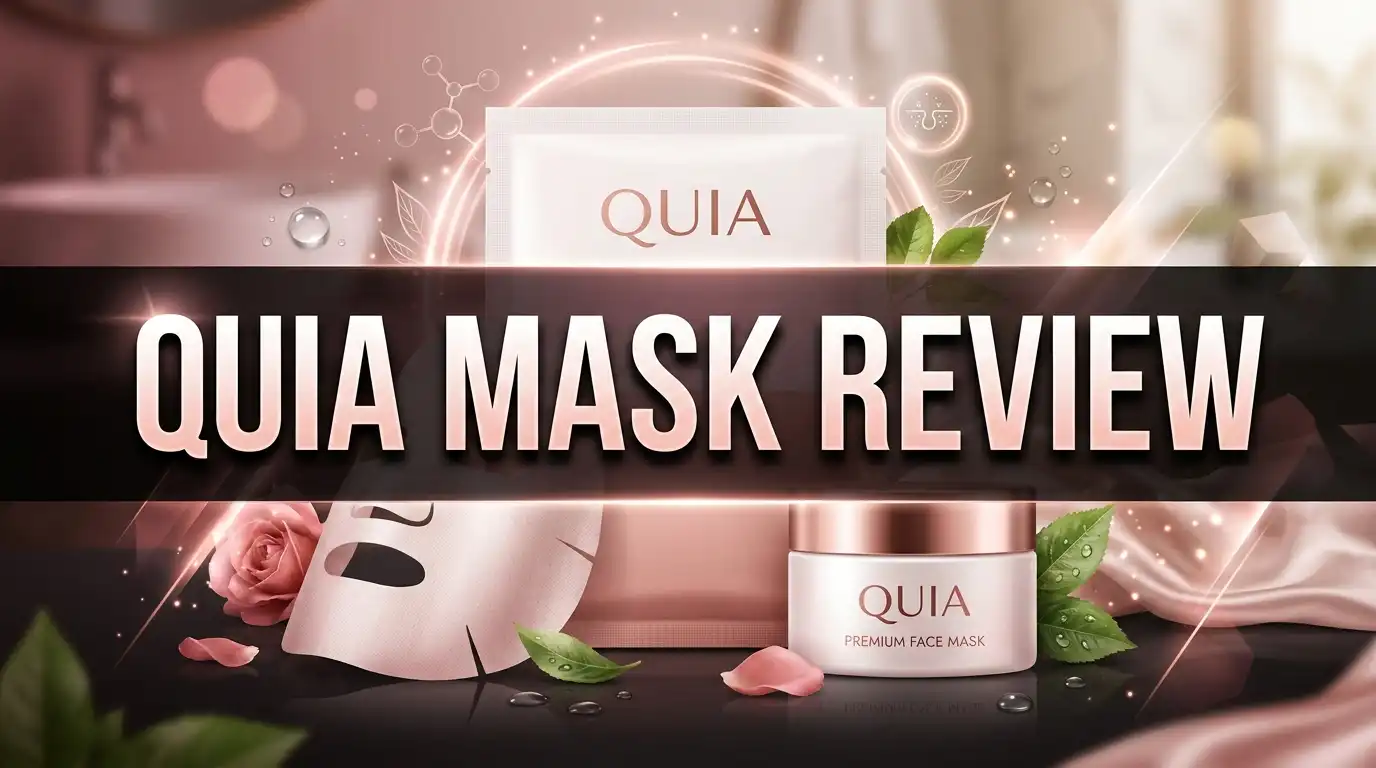
Quia Mask Review: Korean Mask Really Deliver Glass Skin?
You have probably seen it on your feed. A woman spreads a thick clear gel over her face, sleeps, then peels off a full face film the next morning. Her skin looks plump, tight, and glowing. That video is almost always a Quia mask video.
The clips are hypnotic. The claims are big. Poreless skin. Firmer skin. Faded dark spots. Overnight results. But social media is a highlight reel, and skincare marketing loves a dramatic before and after.
So I dug in. I looked at the ingredient list, the brand claims, real buyer feedback on Reddit and Trustpilot, and what dermatology tells us about collagen masks in general. This review covers what the Quia mask actually does, what it cannot do, and whether it deserves a spot in your nightly routine.
No hype. No fluff. Just a clear breakdown so you can decide with confidence.
In a Nutshell: The Quia Mask Review Summary
Short on time? Here is everything condensed into a few honest takeaways.
- The product is a peel off overnight wrapping mask. You apply a thick layer of clear gel after your night cream. It dries into a flexible film in about 15 minutes. You peel it away in one piece the next morning.
- The hydration payoff is real and fast. Users consistently report softer, smoother, plumper skin the very next morning. The film traps moisture against your face for hours, which is why skin looks so refreshed.
- The results are temporary, not permanent. Reddit users who tested it repeatedly said the glow and pore blurring effect fades. One reviewer described it as a special occasion product, used the night before an event.
- The formula is genuinely decent. It contains niacinamide, sodium hyaluronate, soluble collagen, panthenol, ectoin, glycerin, and a berry extract blend. No added fragrance. No artificial color.
- Sensitive skin results are mixed. Some users with reactive skin had zero issues. Others reported stinging, tightness, dryness, or a prickly sensation and had to remove it overnight.
- The brand has real credibility problems. Multiple buyers report refund disputes, questionable award badges, inflated review counts, and shipping origins that clash with the Korean branding. Buy through a marketplace with easy returns.
What Is the Quia Mask, Exactly?
The Quia mask is an overnight wrapping mask. That category is different from a sheet mask and different from a sleeping cream.
You scoop out a clear jelly gel and spread it across your face with a brush or spatula. It sits as a thick layer, then slowly sets into a soft flexible film.
That film is the whole point. It acts like a breathable seal over your skin. Water in the formula cannot evaporate, so your skin stays soaked in active ingredients for hours.
The technical term for this is occlusion. Occlusion boosts absorption and raises skin hydration levels quickly. It is the same principle behind slugging, just with a peelable film instead of an ointment.
Quia sells the mask in a 75ml jar, which is about 2.53 fluid ounces. The brand suggests two to three uses per week rather than nightly use.
The morning reveal is the fun part. You lift an edge and pull the entire face shaped film off in one piece. If it tears, you rinse the rest away with lukewarm water.
Quia positions the mask as a triple action product for elasticity, hydration, and glow. The marketing leans heavily on the phrase glass skin, a Korean beauty term for skin that looks smooth, dewy, and almost translucent.
Whether it earns that label depends on your expectations. As a hydration booster, it performs. As a permanent fix for pores or pigment, it does not.
Quia Collagen Night Wrapping Mask

- THE RESULTS THAT LOOK LIKE SLEEPING 8+ HOURS: This overnight peel-off mask seals in moisture and keeps working for...
- SKIN THAT FEELS LIKE YOU AGAIN: Women 40+ say they look less tired. Fine lines around their eyes feel softer, and...
- HERE'S WHAT'S ACTUALLY IN IT: Small-molecule hydrolyzed collagen, niacinamide, ceramide NP and hyaluronic acid...
Last update on 2026-08-08 / Affiliate links / Images from Amazon Product Advertising API
This is the original and the one that went viral. It is the product most people mean when they say Quia mask.
The texture is a clear, slightly bouncy gel. It has no strong scent, which sensitive noses will appreciate. Quia states the formula contains no artificial fragrance and no artificial color.
You get 75ml per jar. Application uses a generous amount, so most users report roughly 10 to 15 uses depending on how thick they go. At two applications per week, one jar lasts around six to eight weeks.
The drying time runs about 15 minutes. You need to wait it out before your face touches a pillow, or you will smear gel across your bedding.
Removal is oddly satisfying. When applied thickly enough, the film peels away as a single sheet. Thin patches tear and require rinsing.
The immediate result is consistent across reviews. Skin feels soft, looks plumper, and pores appear temporarily blurred. Redness looks calmer for many users too.
One Reddit reviewer said the redness reduction impressed her most, but she needed three sessions before seeing a clear difference. That is a useful expectation to set.
A word of caution. Not everyone tolerates it. One user described a sensation like tiny cuts and washed it off in the middle of the night. Patch test on your jawline first.
The brand offers a 60 day money back guarantee on its own site, though buyers have disputed how that guarantee actually works in practice.
Key Ingredients Inside the Quia Mask
Ingredient lists tell the truth better than marketing copy. Here is what is actually doing the work.
Polyvinyl alcohol is the film former. It is the reason the gel dries into a peelable sheet. It is a common cosmetic polymer with a long safety record, though it can feel tight as it sets.
Sodium hyaluronate is the small molecule form of hyaluronic acid. It pulls water into the upper skin layers and plumps fine lines temporarily.
Niacinamide is the strongest player here. Research supports it for improving skin barrier function, reducing the look of pores, evening skin tone, and calming redness over time.
Soluble collagen sits on the surface as a humectant. It does not travel into your dermis and build new collagen. No topical collagen molecule can. It hydrates and smooths, and that is the honest scope.
Panthenol, also called provitamin B5, soothes and supports barrier repair. Glycerin holds water. Butylene glycol helps other ingredients absorb.
Ectoin is an interesting addition. It is a stress protecting molecule studied for barrier support and moisture retention.
The formula also includes a berry extract blend with blackberry, blueberry, raspberry, cranberry, black currant, acai, and bilberry, plus kelp extract. These contribute antioxidants, though at unknown concentrations near the end of the list.
Quia also lists a long exclusion roster covering parabens, sulfates, phenoxyethanol, mineral oil, retinol, and synthetic fragrance. Preservation instead comes from 1,2 hexanediol, caprylyl glycol, and ethylhexylglycerin.
Top 3 Alternatives for the Quia Collagen Night Wrapping Mask
Not sold on Quia? These three deliver similar overnight benefits from brands with longer track records and clearer return policies.

- Awaken Your Glow with Overnight Elasticity Booster - Protect and enhance your skin's elasticity with our collagen...
- Comes Off in One Piece -Just like there's no better feeling than a clean shed, this easy-to-peel mask leaves your...
- To avoid confusion, the tube is filled to 80% capacity for safety and secure transport, while the product itself...
Last update on 2026-08-02 / Affiliate links / Images from Amazon Product Advertising API

- Glass Glow Skin by Morning: Elevate your self-care ritual with a shimmering pink pearl mask that creates a glowy...
- Refined & Firmer-Looking Skin: A powerful blend of PDRN and Caffeine supports the skin’s moisture barrier while...
- Depuff with Caffeine Magic: Caffeine helps reduce puffiness and dullness, promoting a more refreshed, energized...
Last update on 2026-08-08 / Affiliate links / Images from Amazon Product Advertising API

- A Korean sleeping mask to deeply hydrate and brighten skin while you sleep. The lightweight, refreshing gel formula...
- Packed with squalane, niacinamide, ceramides, and a special blend of 3 hyaluronic acids for deep hydration...
- Suggested Use: Apply 2-3 times a week after moisturizer, as the last step of your PM routine. Rinse off in the AM.

Last update on 2026-08-02 / Affiliate links / Images from Amazon Product Advertising API
The Medicube Collagen Overnight Wrapping Mask is the closest match. It uses the same peel off film concept with an 8 hour wear window and comes from an established Korean brand with a large verified review base. Many people consider it the original in this category.
The Medicube PDRN Caffeine Wrapping Mask targets a slightly different goal. Caffeine helps with morning puffiness, and the formula leans into firmness and facial contour support. Choose this one if you wake up looking swollen rather than dry.
The Laneige Water Sleeping Mask takes the simpler route. There is no film and no peeling. You smooth on a lightweight gel cream as your final night step and rinse in the morning.
It packs squalane, niacinamide, ceramides, and a blend of three hyaluronic acids. It is the gentlest option of the three and the safest pick for reactive skin.
Price wise, the Laneige option usually costs the least per use. The two Medicube masks land in the same range as Quia.
If you want the dramatic peel moment, go Medicube. If you want reliable hydration with zero drama, go Laneige.
How to Apply the Quia Mask Correctly
Application technique changes your results more than you would expect. Most complaints trace back to using too little product.
Step one. Cleanse thoroughly and pat your face dry. Any leftover oil or makeup weakens the film seal.
Step two. Apply toner, serum, and then your night cream. This mask goes on last, over your moisturizer, not directly on bare skin.
That order confuses people, so it is worth repeating. The mask is a sealing layer, not a treatment layer. Your actives go underneath it.
Step three. Scoop out a generous amount and spread an even layer with the included spatula or a flat brush. Avoid your eyebrows, hairline, eyes, and lips.
Thin application is the number one mistake. A thin coat dries into a fragile film that shreds during removal.
Step four. Sit still for roughly 15 minutes. The gel turns from cloudy to clear and stops feeling wet to the touch.
Step five. Sleep. The film flexes with your face and should not transfer to your pillowcase once dry.
Step six. In the morning, lift one edge near your jaw and peel upward slowly. Rinse away any stubborn patches with lukewarm water.
Follow with sunscreen. Your skin is freshly hydrated and you want to protect that surface.
Use it two to three times weekly. Nightly use offers no extra benefit and raises irritation risk.
My Honest Take on the First Night
The first application feels strange in a good way. The gel is cool and slippery, and spreading it evenly takes a couple of minutes of practice.
The drying phase is where you notice the tightening. It is not painful for most people, but you feel your face stiffen slightly as the film sets.
Smiling becomes a challenge. Talking feels odd. Plan to apply it while watching something rather than during a phone call.
Sleeping in it turned out to be a non issue. Once dry, it stays put and does not stick to fabric.
The morning peel is genuinely satisfying. Watching a full face shaped film lift off in one piece explains why this product exploded on short form video.
Skin underneath felt noticeably softer. Not different, not transformed, just very well hydrated and smooth to the touch.
Pores on my nose looked temporarily less obvious. Fine lines around my eyes looked slightly softer, which is the classic hydration plumping effect.
Redness looked calmer, and that surprised me. Niacinamide and panthenol likely deserve credit there.
By afternoon, most of the visible glow had settled back to normal. That timeline matches what long term users describe.
So the honest verdict on night one is this. It works exactly like a very effective hydrating treatment, and the peel is a fun bonus rather than a functional necessity.
Results After Two to Three Weeks of Use
Single use impressions only tell half the story. Consistency reveals what a product truly delivers.
Reviewers who used it two to three times weekly for a few weeks report a steady baseline improvement in softness and glow. Skin looks healthier overall rather than dramatically changed.
One Reddit user with sensitive skin said her skin stayed hydrated with a natural glow, and her dermatologist approved the product. She noted she did not achieve the glass glow seen in ads.
Another user tracked her results across four or five sessions. She saw reduced blackhead visibility, smaller looking pores, and calmer redness, but called it clearly short term.
That distinction matters. The mask improves how your skin looks and feels, not the underlying structure of your pores or pigment.
Hyperpigmentation is where expectations need the biggest reset. Fading dark spots requires consistent use of proven brightening actives plus daily sunscreen over months.
A collagen wrapping mask simply does not have the mechanism to do that in a few nights. The niacinamide inside helps gradually, but it works the same whether it sits under a film or not.
Elasticity claims deserve similar caution. Topical collagen hydrates the surface. It does not rebuild the collagen network in your dermis.
So what should you realistically expect after three weeks? Softer texture, better hydration, a temporary blurring effect on pores, and calmer redness. That is a solid outcome for a mask.
Quia Turmeric and Kojic Acid Overnight Wrapping Mask

- Wake Up to a Radiant, Even-Toned Skin – This overnight wrap works while you sleep, helping to refine dull, uneven...
- Intensive Overnight Care Without Effort – A soft wrapping film locks in hydration and active ingredients for up...
- Protects Against Daily and Overnight Skin Stressors – Powered by Turmeric and Kojic Acid, this formula helps...
Last update on 2026-08-08 / Affiliate links / Images from Amazon Product Advertising API
Quia released a second version aimed at tone and dark spots. It uses the same wrapping film delivery with a different active lineup.
Kojic acid is a well studied tyrosinase inhibitor. It slows melanin production, which makes it a legitimate choice for uneven tone and post blemish marks.
Turmeric, through its curcumin content, brings antioxidant and calming properties. It has a long history in traditional skincare for dull looking skin.
The formula also includes niacinamide and centella asiatica. Centella is a favorite in Korean skincare for soothing stressed and reactive skin.
That combination makes this version more interesting for anyone whose main concern is dullness or discoloration rather than dryness.
Application follows the same routine. Cleanse, layer your usual products, spread the mask on top, wait 15 minutes, sleep, then peel in the morning.
Marketing for this one promises fading dark spots within two weeks. Treat that timeline with healthy skepticism. Pigment corrections generally need eight to twelve weeks of consistent effort.
Kojic acid can also sensitize some people. If you already use retinoids, exfoliating acids, or vitamin C, introduce this slowly and space out your active nights.
Sunscreen becomes mandatory rather than optional when you use brightening ingredients. Skipping it undoes your progress and can worsen the spots you are treating.
For a hydration first experience, the original collagen version remains the better pick. For tone work with a hydration bonus, this one makes sense.
Pros and Cons of the Quia Mask
Every product has trade offs. Here is the balanced view.
Pros:
- The hydration effect is immediate and noticeable. Skin feels genuinely softer and smoother by morning.
- The ingredient list is respectable, with niacinamide, sodium hyaluronate, panthenol, glycerin, ectoin, and soluble collagen doing real work.
- There is no added fragrance and no artificial color, which lowers irritation risk for many people.
- The peel off film seals in your existing skincare, so your serums and creams work harder overnight.
- Redness often looks calmer, a benefit multiple users highlighted independently.
- Application is simple and the peel step feels rewarding, which makes consistency easier.
- One jar stretches across roughly six to eight weeks of twice weekly use.
Cons:
- Results are temporary. The glow and pore blurring effect fades within a day or two.
- Claims about firming and fading dark spots overstate what a topical film can achieve.
- Some users report stinging, prickling, tightness, or post use dryness, especially on reactive skin.
- The 15 minute drying wait makes it inconvenient on busy nights.
- Thin application leads to a film that tears instead of peeling cleanly.
- The brand has significant trust issues. Buyers report refund disputes, award badges that do not match published winners, and review counts on the website that exceed independent totals.
- Several users report shipping from China despite the Korean branding, which clashes with the marketing story.
What Real Customers Say About Quia
Independent feedback paints a more complicated picture than the ad videos do.
On Trustpilot, the brand sits around a 3 out of 5 average across roughly 130 reviews. The company website advertises a 4.8 rating with a far larger review count. That gap alone deserves your attention.
Positive reviews are consistent in what they praise. Buyers describe soft, smooth skin after the first use and pores that look temporarily invisible.
Negative reviews cluster around two themes. The first involves skin reactions, including dryness, patchiness, and discomfort during wear.
The second theme is customer service. Multiple Reddit users described requesting refunds under the advertised 60 day guarantee and hitting resistance.
One buyer reported being asked for before and after photos, then offered store credit, then offered only 30 percent of her purchase price. Another reported being told the guarantee covers unopened products only.
That interpretation contradicts how the guarantee reads in advertising. Several users said they filed chargebacks and complaints with consumer protection authorities.
There are also creator complaints. At least one influencer publicly stated the brand used her video content without permission to promote products she never used.
None of this means the formula is bad. The ingredient list stands on its own merits.
It does mean you should buy through a marketplace with a clear return process rather than directly from the brand site. That single choice removes most of the risk.
Who Should Try the Quia Mask
This product suits some people very well and frustrates others. Here is how to tell which group you fall into.
Dry and dehydrated skin types benefit most. The occlusive film addresses exactly what your skin lacks, and you will see the biggest visible change.
Anyone prepping for an event will like it. Apply it the night before a wedding, interview, or photo session for smoother makeup application the next day.
Normal and combination skin can use it comfortably at two sessions per week as a maintenance treat.
Mature skin will appreciate the temporary plumping. Hydrated skin reflects light better and fine lines look softer.
Now for the people who should be careful or skip it entirely.
Very sensitive or compromised skin should patch test first. Apply a small amount to your jawline, leave it a few hours, and check for reaction before committing to a full face overnight.
Anyone with active eczema, rosacea flares, or broken skin should wait. Occlusion over inflamed skin can worsen irritation.
Acne prone skin needs caution. Heavy occlusion traps oil and can trigger congestion in some people.
People chasing pigment correction should invest elsewhere. A dedicated brightening routine with sunscreen delivers better results for that goal.
Anyone who wants a fast routine will find it annoying. The 15 minute wait is unavoidable.
And if a hassle free refund matters to you, weigh the brand feedback carefully before ordering directly.
Price and Value: Is the Quia Mask Worth It?
Value depends on what you compare it against.
A 75ml jar delivers roughly 10 to 15 applications. Split across a typical price point, that lands in a similar range per use to a mid tier sheet mask.
Compare that to sheet masks and the economics look fine. Sheet masks cost a few dollars each, deliver one session, and create packaging waste every time.
Compare it to a good hydrating night cream and the picture shifts. A quality cream covers more nights for similar money and needs no drying time.
So the honest framing is this. You are paying partly for the hydration and partly for the experience.
The peel moment, the ritual, the visible morning change: those things have real value if they keep you consistent with skincare.
But if you only want the hydration result, a simple occlusive routine achieves something similar for less. Layer a hyaluronic acid serum, a ceramide cream, and a thin balm on top.
The Medicube version costs about the same and comes from a brand with a longer track record. The Laneige option costs less per use and carries the lowest irritation risk.
Where Quia loses points is not the formula. It is the risk attached to buying from a company with disputed refund practices.
Purchase through a retailer with straightforward returns and that risk mostly disappears. At that point, the mask becomes a reasonable purchase for the right skin type.
Tips to Get the Best Results From Your Quia Mask
Small adjustments make a real difference. These come from patterns in user feedback.
Apply more than you think you need. A generous even layer peels off cleanly. A thin layer tears and leaves patches behind.
Never skip your moisturizer underneath. The mask seals in what is already on your skin, so give it something worth sealing.
Use a flat brush instead of your fingers. You get an even layer with less waste and cleaner edges.
Leave a small gap around your hairline and eyebrows. Peeling dried film out of hair is unpleasant.
Set a timer for 15 minutes and use that time for something stationary. Moving your face too much during setting creates weak spots.
Space out your strong actives. Skip retinoids and exfoliating acids on mask nights to reduce irritation risk.
Peel slowly from the bottom up. Rushing tugs at your skin and can cause redness.
Rinse afterward even if the film comes off cleanly. A quick lukewarm rinse removes residue and feels better under makeup.
Always apply sunscreen the next morning. Freshly hydrated skin deserves protection, and niacinamide results improve with sun defense.
Cap the jar tightly. The formula dries out if air gets in, and a dried jar is wasted money.
Track your own results with photos. Take a picture in the same light before you start and again after three weeks. Your camera is more honest than your memory.
Final Verdict on the Quia Mask
The Quia mask is a good hydrating treatment wrapped in oversized marketing claims.
The formula deserves credit. Niacinamide, sodium hyaluronate, panthenol, glycerin, and ectoin form a sensible hydration and barrier support lineup with no fragrance to irritate.
The delivery method works. An occlusive film genuinely boosts moisture retention, and the morning result reflects that.
The claims overreach. Topical collagen does not rebuild your dermal collagen. A two week mask routine does not erase hyperpigmentation. Pore size does not permanently shrink.
Judge it as a hydration mask and you will be happy. Judge it as an anti aging or brightening treatment and you will feel misled.
The brand issues are the bigger concern. Refund disputes, mismatched review counts, questionable award badges, and content usage complaints add up to a pattern worth noting.
That does not make the product unsafe. It does mean where you buy matters as much as what you buy.
My recommendation is straightforward. If the peel off overnight mask concept appeals to you, try it through a retailer with easy returns, or choose the Medicube version instead.
If you simply want great overnight hydration with less fuss, the Laneige Water Sleeping Mask does the job for less money and less risk.
And whichever you choose, patch test first. Your skin will tell you the truth faster than any review can.
Frequently Asked Questions
How often should I use the Quia mask?
Two to three times per week works best. Nightly use adds no extra benefit and raises the chance of irritation or dryness.
Do I apply the Quia mask on bare skin or over moisturizer?
Over moisturizer. Cleanse, apply toner and serum, then your night cream, and finish with the mask as the final layer.
How long does the Quia mask take to dry?
About 15 minutes. Wait until the gel turns clear and no longer feels wet before you lie down.
Can I use the Quia mask with retinol or vitamin C?
Not on the same night. Occlusion intensifies active ingredients, which can trigger irritation. Alternate nights instead.
Will the Quia mask fade my dark spots?
Not meaningfully on its own. Niacinamide helps slowly, and the kojic acid version targets pigment more directly, but real progress needs months of consistent care plus daily sunscreen.
Is the Quia mask safe for sensitive skin?
Results vary. Some sensitive skin users report zero problems while others describe stinging or tightness. Patch test on your jawline first.
How many uses does one jar contain?
Roughly 10 to 15 applications from the 75ml jar, depending on how thickly you apply it.
Does the mask really peel off in one piece?
Usually, if you apply a thick enough layer. Thin coats tear and require rinsing with lukewarm water.
Is Quia an authentic Korean brand?
That is disputed. Several buyers report packages shipped from China and note the packaging does not clearly state a country of manufacture.
What is the best alternative to the Quia mask?
The Medicube Collagen Overnight Wrapping Mask for a nearly identical experience, or the Laneige Water Sleeping Mask for gentler hydration without the peeling step.

I’m Danica, the voice behind StyleSense! As a passionate explorer of all things fashion, beauty, and wellness, I’m dedicated to helping you navigate the overwhelming world of style and self-care products. With years of experience testing and reviewing everything from trendy fashion pieces to innovative beauty solutions and health supplements, I bring you honest, detailed insights that you can trust.