Tsubaki Hair Mask Review: Japanese Camellia Repair Damaged Hair?
Frizzy hair on a rushed morning feels like a small daily punishment. You brush, you smooth, you spray, and by lunchtime your ends look tired again. That cycle pushed millions of people in Japan toward one small pink tub, and now the rest of the world wants in.
The Tsubaki hair mask has quietly become one of the most repurchased hair treatments in Japanese drugstores. Shiseido built it around camellia seed oil, an old Japanese beauty staple. Bloggers rave about it. Reddit threads argue about it. TikTok keeps selling out of it.
So does it deserve the noise? I tested it, read hundreds of user reports, studied the ingredient list, and compared it against its biggest rivals. This review covers the formula, the results, the smell, the price, the mistakes people make, and the hair types that should probably skip it.
Grab a cup of tea. By the end you will know exactly whether this tub belongs in your shower.
In A Nutshell
- The core promise is real repair, not just slip. Shiseido loads this mask with camellia seed oil, royal jelly extract, soy and pearl protein, plus ionic repair ingredients that reconnect weakened bonds inside the strand. Most users report visibly smoother, glossier hair after the very first wash.
- It works with zero waiting time. Shiseido states you can rinse it out immediately and still get the full benefit. That single detail makes it a favorite for people who shower in five minutes flat.
- Damaged, coloured, or bleached hair benefits most. Reviewers with double bleached or permed hair describe it as a holy grail. Fine, thin, oily hair can get stringy ends if you use too much.
- The scent is strong and sweet. Shiseido calls it camellia floral. Many users read it as fruity candy. It fades fast after rinsing, but sensitive noses should know first.
- The value is excellent. One 180g tub lasts two to six months depending on hair length, which puts the cost per use far below a salon treatment.
- It contains silicones and fragrance. That is fine for most people, but anyone following a strictly silicone free or fragrance free routine should look elsewhere.
Tsubaki Premium Repair Hair Mask: The Quick Verdict

- Repairing Formula: Contains ingredients like hyaluronic acid and ceramides to help repair and restore moisture to...
- Moisturizing Treatment: The mask helps to deeply moisturize and hydrate hair, leaving it soft, smooth and...
- For All Hair Types: Suitable for all hair types, including color-treated, damaged, curly, straight, thick or fine...
Last update on 2026-08-02 / Affiliate links / Images from Amazon Product Advertising API
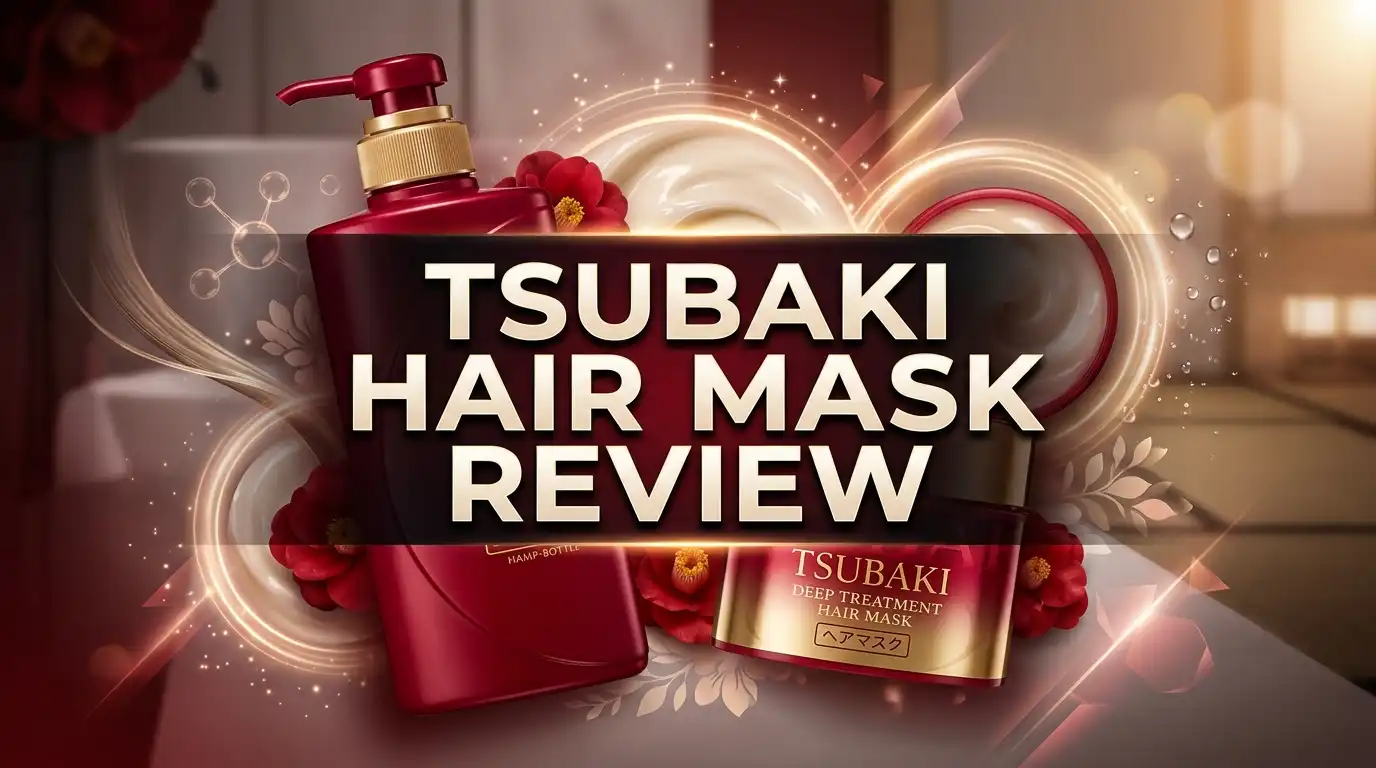
The Tsubaki Premium Repair Hair Mask is a rinse off treatment in a 180g tub. Shiseido positions it as the strongest repair product in the Tsubaki line.
The texture is thick and creamy. It grips the hair instead of dripping down your arms. You need less than you think.
My honest take is that this mask overdelivers for the price. It does not rebuild your hair permanently, and no mask can. It does coat, seal, and soften damaged cuticles so effectively that your hair behaves like healthier hair.
The improvement shows up in three places. Detangling gets easier. Blow drying gets faster. Frizz stays flat for longer, even in humidity.
The catch is dosage. People who slather it on like a normal conditioner often end up with heavy, slightly greasy ends the next day. That is the single most common complaint online, and it is a user error rather than a formula flaw.
Hair type matters too. Thick, coarse, coloured, or chemically treated hair drinks this mask up happily. Fine, straight, oily hair needs a dime sized amount at most, applied only to the last few inches.
I rate it a strong buy for damaged hair and a cautious maybe for fine hair. If your hair has been bleached, permed, or heat styled for years, this tub will likely become a permanent fixture in your bathroom.
What Is The Tsubaki Hair Mask
Tsubaki is a Shiseido hair care brand launched in Japan and named after the Japanese camellia flower. The brand built its identity around camellia seed oil, which Japanese women have used on their hair for centuries.
The Premium Repair Mask sits at the top of the range. Shiseido also sells a Premium Moist version for dryness and a Premium EX Repair version sold in several markets.
All versions share the same idea: deliver nutrients deep into the strand, then lock them in. The repair version leans into strength and bond support. The moist version leans into softness and hydration.
The packaging is simple. A squat plastic tub with a screw lid, printed in glossy pink and gold. It looks more expensive than it costs.
Inside you get 180g of product. That translates to roughly 25 to 60 uses depending on your hair length and how generous you are.
The mask is a weekly treatment, not a daily conditioner. Shiseido recommends one or two uses per week, though the brand notes daily use is possible if your hair is severely damaged.
One detail sets it apart from Western masks. There is no waiting period. Shiseido tested the formula so that immediate rinsing still delivers results, and the repair effect continues after the water stops.
That claim sounds like marketing. In practice, users who rinse instantly report the same smoothness as users who wait ten minutes. It is genuinely convenient.
Key Ingredients That Do The Work
The ingredient list reads like a greatest hits album of Japanese hair care. Here is what actually matters.
Camellia seed oil is the signature. It is rich in oleic acid, sinks into the hair shaft rather than sitting on top, and adds natural gloss while smoothing the cuticle.
Royal jelly extract brings amino acids, proteins, and vitamins. It supports elasticity, which means fewer snapped strands when you brush.
Soy and pearl protein fill in weak spots along damaged sections. Hydrolysed conchiolin, a pearl derived protein, appears on the label and helps the surface feel dense and polished.
Sodium acetyl hyaluronate is a small molecule form of hyaluronic acid. It draws water into the strand and holds it there.
Silicones do a lot of the visible work here. Dimethicone, amodimethicone, and aminopropyl dimethicone create that instant glassy slip and block humidity from swelling the hair.
Behentrimonium chloride and steartrimonium chloride are conditioning agents with a positive charge. They cling to damaged, negatively charged areas, which is why the mask targets your worst sections automatically.
Glycerin, sorbitol, and hydroxyethyl urea round out the humectant side. They pull moisture in and keep the mask from feeling waxy.
The formula also includes fragrance and two colourants, red 227 and yellow 4. If you avoid dyes or added fragrance, this is not your product. For everyone else, the blend is well balanced and clearly built for repair rather than pure moisture.
Top 3 Alternative for Tsubaki Premium Repair Hair Mask
Not every head of hair loves the same mask. If Tsubaki feels too heavy, too sweet, or simply hard to find, these three Japanese and drugstore favorites cover the same ground from different angles.
Shiseido Fino Premium Touch Penetrating Serum Hair Mask is the eternal rival. It is richer, more concentrated, and famous for turning coarse frizz into silk. Reviewers who find Tsubaki too light usually switch to this one and stay.

- Fino Premium Touch Penetrating Beauty Liquid Hair Mask 230g x 2-piece Set
- Size: 230g (x2)
- Package weight: 0.61 kg
Last update on 2026-08-08 / Affiliate links / Images from Amazon Product Advertising API
Ichikami Premium Hair Mask Treatment is the gentler option. Kracie built it around rice bran and botanical extracts, and it suits fine or easily weighed down hair much better. The scent is soft and floral rather than sweet.

- Premium Hair Mask: Indulge in luxurious hair care with this premium hair mask from Ichikami.
- Intensive Repair: Formulated to deeply nourish and revitalize damaged, dry, or brittle hair.
- Nourishing Ingredients: Enriched with beneficial nutrients to promote healthy, vibrant locks.
Last update on 2026-08-02 / Affiliate links / Images from Amazon Product Advertising API
Pantene Miracle Rescue Deep Conditioning Hair Mask is the accessible pick. It costs less, sits on most drugstore shelves, and focuses on bond building for dry, damaged, colour treated hair. Results are less glossy than Tsubaki but reliably softening.

- Enhanced Hair Wellness and Lustrous Sheen
- Velvety Softness Throughout
- Rejuvenated Heat or Color-Treated Tresses
Last update on 2026-08-08 / Affiliate links / Images from Amazon Product Advertising API
My quick guidance: choose Fino for thick coarse hair, Ichikami for fine hair, and Pantene for a budget friendly weekly treatment. Tsubaki still sits in the sweet spot between all three, which explains its popularity.
How To Use The Tsubaki Hair Mask Correctly
Most disappointing reviews trace back to application. Shiseido publishes clear instructions in Japanese, and following them changes the result completely.
Step one: shampoo properly. Wet your hair fully, then cleanse the scalp. A clean base lets the mask bond to the hair instead of the leftover product.
Step two: squeeze out the water. This step gets skipped constantly. Dripping wet hair dilutes the mask and blocks absorption, so squeeze until your hair stops running.
Step three: measure a small amount. Shiseido suggests one or two grape sized scoops for medium length hair. Fine hair needs far less, closer to a dime sized blob.
Step four: apply mid length to ends only. Keep the mask off your roots and scalp, especially if your scalp runs oily. Rake it through with your fingers so every section gets a thin, even coat.
Step five: rinse. You can rinse immediately with no loss of benefit. If you prefer, leave it one to three minutes while you finish washing.
Step six: dry gently. Pat with a microfibre towel rather than rubbing. Air dry or use low heat.
Use it once or twice a week. Bleached or heavily heat styled hair can handle two or three sessions weekly.
One last tip. Pair it with the Tsubaki Premium shampoo and conditioner on off days if you want the full effect. The routine compounds nicely.
Texture, Scent And Sensory Experience
Let us talk about the part reviews often gloss over. How the mask actually feels in your hands.
The texture is thick, dense, and slightly waxy in the tub. Scoop it out and it holds its shape instead of running.
On wet hair it melts fast. Two passes with your fingers and it disappears into the strands. There is no gritty or sticky stage.
The slip is immediate and generous. You can run a wide tooth comb through knotted, previously stubborn hair in a single stroke.
Rinsing is clean. The mask releases quickly and does not leave that film some rich masks leave behind.
The scent divides people. Shiseido describes it as an elegant camellia floral. Plenty of reviewers describe it as fruity gummy candy or sweet berry.
It is strong in the shower. It is noticeably softer once your hair dries, and by the next morning it is a faint sweetness rather than a perfume.
I like it. It smells expensive in a playful way, and it lingers just enough that people compliment your hair.
If you are sensitive to fragrance, this will be too much. There is no unscented version.
The tub design deserves one small complaint. A wide mouth makes scooping easy, but wet fingers dipping repeatedly into the pot is not the most hygienic setup. Use a small spatula if that bothers you.
My Results After Four Weeks Of Use
I used the mask twice a week for four weeks on colour treated hair with dry ends and regular heat styling.
Week one delivered the biggest visible jump. After the first wash my hair felt denser and smoother, and my blow dry took noticeably less time.
Shine was the clearest change. Under a lamp my mid lengths reflected light in a way they had not for months.
Week two brought the frizz control. Humid weather usually puffs my hair by midday, and it stayed flat and settled instead.
Detangling became almost effortless. My brush stopped catching at the ends, which alone reduced breakage.
Week three showed the limits. The mask does not thicken your hair or regrow anything, and split ends stay split. It smooths and seals, and that is the honest boundary.
Week four confirmed the routine. Two applications weekly kept my hair soft without buildup, and my ends never felt coated or greasy because I kept the dose small.
Long term reviewers report one interesting pattern. Some notice the wow factor softens after several months of continuous weekly use, and results return after rotating in a different mask for a few weeks.
My verdict after a month: this is a reliable maintenance treatment, not a miracle. It makes damaged hair look and behave much better between salon visits, and it does that cheaply and quickly.
Pros And Cons Of The Tsubaki Hair Mask
Here is the balanced summary after testing and reading widespread user feedback.
Pros
- Instant smoothness and shine appear after a single use, with no waiting time required before rinsing.
- Camellia seed oil, royal jelly extract, and pearl protein target damaged, coloured, and chemically treated hair specifically.
- The formula controls frizz in humidity better than most drugstore masks in this price range.
- A 180g tub lasts months, which makes the cost per application very low.
- Detangling and blow drying both get faster, which reduces daily mechanical damage.
- The creamy texture spreads easily and rinses out cleanly without film or residue.
- Widely available online and in Asian beauty shops, usually at drugstore prices.
Cons
- Fine, thin, or oily hair can look stringy if you apply too much or go too close to the roots.
- The fragrance is strong and sweet, which will not suit fragrance sensitive users.
- It contains silicones, added fragrance, and synthetic colourants, so it fails a clean beauty checklist.
- Results are cosmetic smoothing rather than permanent structural repair.
- Some long term users report diminishing impact after several months of continuous use.
- The wide tub requires dipping fingers in, which is less hygienic than a tube or pump.
- Split ends still need a trim, since no mask can seal them permanently.
Tsubaki Versus Fino: Which Japanese Mask Wins
This is the debate that fills every Japanese hair care forum. Both are Shiseido products, and both smooth damaged hair beautifully.
Fino Premium Touch is the heavier hitter. Its formula is more concentrated and oil rich, so coarse, thick, very dry hair usually prefers it.
Tsubaki Premium Repair is the more balanced option. It smooths without weight, which suits medium hair and anyone who dislikes a rich finish.
Both work with no waiting time. Both need roughly the same amount per use, and both rinse out easily.
The scent differs. Fino leans warm floral and slightly soapy. Tsubaki leans sweet and fruity.
Size favours Fino at 230g against Tsubaki at 180g, though prices sit close together depending on the seller.
Finish is the real decider. Fino gives a soft, cushioned, almost velvet feel. Tsubaki gives a glossier, sleeker, more polished feel.
Reddit users split neatly along hair type lines. People with thick frizzy hair usually crown Fino. People with medium or fine hair usually crown Tsubaki.
My recommendation is simple. If your hair is coarse and thirsty, start with Fino. If your hair is medium, coloured, and prone to frizz rather than dryness, start with Tsubaki.
Owning both is not excessive. Many long term users rotate between them, using Fino in winter and Tsubaki in summer.
Price And Where To Buy The Tsubaki Premium Repair Mask
- Repairing Formula: Contains ingredients like hyaluronic acid and ceramides to help repair and restore moisture to...
- Moisturizing Treatment: The mask helps to deeply moisturize and hydrate hair, leaving it soft, smooth and...
- For All Hair Types: Suitable for all hair types, including color-treated, damaged, curly, straight, thick or fine...
Last update on 2026-08-02 / Affiliate links / Images from Amazon Product Advertising API
Price varies more than you would expect, because most listings outside Japan are imports.
In Japanese drugstores the tub sits in genuinely cheap territory. Outside Japan you pay an import markup, and the total usually still lands under the cost of one salon treatment.
Amazon is the easiest route for most buyers. Listings appear as single tubs and multipacks, and multipacks bring the unit price down noticeably.
Japanese specialty retailers and Asian beauty sites also stock it reliably. Prices there are often competitive, though shipping takes longer.
Watch out for two things when buying. Check the exact version, since Premium Repair, Premium EX Repair, and Premium Moist are different products. Also check the weight, because refill pouches and travel sizes exist.
Value per use is where this mask shines. A single tub covers two to six months of weekly treatments, which works out to pennies per application.
Compare that to a salon repair treatment and the maths gets absurd. One salon session often costs more than five tubs.
Buy the tub rather than sachets if you plan to keep using it. Sachets are useful for testing the scent and finish before committing.
Refill pouches appear in Japan and cut plastic waste plus cost. They are harder to find abroad but worth grabbing if you see them.
Common Mistakes That Ruin Your Results
Almost every bad review I read describes one of these five errors. Fix them and the mask performs.
Mistake one: using too much. This formula is concentrated. A grape sized scoop covers medium length hair, and fine hair needs half that.
Mistake two: applying to the scalp. The mask is built for damaged mid lengths and ends. On the scalp it flattens roots and encourages grease.
Mistake three: applying to dripping hair. Excess water blocks absorption. Squeeze your hair firmly first.
Mistake four: treating it as a daily conditioner. Twice weekly is the sweet spot for most people. Daily use on healthy hair leads to buildup and limp strands.
Mistake five: expecting permanent repair. This is a cosmetic treatment. It smooths and seals damage rather than reversing it, so trims still matter.
Two bonus tips help a lot. Clarify your hair every three or four weeks to reset any silicone buildup, and always apply the mask to sectioned hair so coverage stays even.
If your hair feels heavy after using it, cut the amount in half before you give up on the tub. That single adjustment saves most disappointed users.
Finally, keep the lid closed and store the tub away from direct shower spray. Water sneaking inside dilutes the formula over time.
Final Verdict: Is The Tsubaki Hair Mask Worth It
Yes, for the right hair. This is one of the best value repair masks available anywhere, and its reputation in Japan is earned rather than manufactured.
Damaged, coloured, permed, or heat styled hair will see a clear difference in one wash. Shine improves, frizz drops, tangles vanish, and styling gets faster.
The zero waiting time claim is the underrated feature. It turns a treatment into something you can actually keep doing every week.
Fine and oily hair types need discipline. Use a tiny amount, keep it to the ends, and the mask still works beautifully.
Skip it if you avoid silicones, dyes, or fragrance. Skip it also if you expect a mask to fix split ends, because nothing does that except scissors.
I would repurchase it. It sits in that rare category of products that cost little, work fast, and never feel like a chore to use.
Frequently Asked Questions
Does the Tsubaki hair mask really work without waiting?
Yes. Shiseido formulated it so that immediate rinsing delivers the full benefit, and the repair effect continues after washing. Leaving it on for a few minutes is optional rather than necessary.
How often should I use the Tsubaki hair mask?
Once or twice a week suits most hair. Heavily bleached or chemically treated hair can handle two or three sessions weekly, while fine hair often does best with one.
Is the Tsubaki hair mask good for fine hair?
It can be, with careful dosing. Use a dime sized amount on the ends only, since larger amounts weigh fine hair down and can look stringy the next day.
Does the Tsubaki hair mask contain silicones?
Yes. Dimethicone, amodimethicone, and aminopropyl dimethicone appear on the label and create the smooth, glossy finish. Anyone following a silicone free routine should choose a different mask.
Can I use the Tsubaki mask instead of conditioner?
You can on treatment days. On other days use a regular conditioner, because the mask is richer and daily use may cause buildup on some hair types.
Tsubaki or Fino, which should I buy first?
Choose Fino for thick, coarse, very dry hair. Choose Tsubaki for medium or fine hair that needs frizz control and shine without heaviness.
Is the Tsubaki hair mask safe for coloured hair?
Yes. It is marketed specifically for damage from colouring, perming, and heat styling, and users with bleached hair report strong results.
How long does one tub last?
Expect two to six months with weekly use. Short or fine hair stretches a 180g tub much further than long, thick hair.

I’m Danica, the voice behind StyleSense! As a passionate explorer of all things fashion, beauty, and wellness, I’m dedicated to helping you navigate the overwhelming world of style and self-care products. With years of experience testing and reviewing everything from trendy fashion pieces to innovative beauty solutions and health supplements, I bring you honest, detailed insights that you can trust.